Gophers Limited Inc Consulting Practice ~ Non Toxic Solutions for Pest Animal Control
Thomas Wittman ~ Gophers Limited Inc Founder
Gophers Limited Inc Consulting Practice ~ Where it all began
Gophers Limited Inc consulting practice has been working on non-toxic solutions since the late seventies when owner Thomas Wittman worked at the UCSC Arboretum while attending UC Santa Cruz as an Environmental Studies Major. Later, Thomas became an organic farmer, went back to UCSC to work for the Farm and Garden Project which led to teaching wild pest animal control and the founding of Gophers Limited Inc in 1991.
This experience of over 40 years has provided us with expertise to help others not only by providing service and tools but also by consulting. We consult to a large community of clients including school districts, public utilities, business places, realtors, HOAs and private residences.
Gophers Limited Inc Consulting Practice ~ What we do
We have successfully consulted with institutions and commercial landscapes and areas that need to refrain from the use of poisons. Schools, government buildings, parks, levees, and waterways all are special focus areas for non-toxic control. We will work with maintenance staff to provide solutions that can be incorporated into daily schedules without large extra outlays of time or find physical solutions that require no time or maintenance.
In our consulting service we address many pest animal issues and find solutions for gopher and mole problems, ground squirrel invasions, rats and larger animals like skunks, raccoons, opossum and deer. We have developed a focus on effective tools and strategies. We also manufacture the best stainless steel barrier products like a square mesh wire and formed plant protection baskets and even an animal proof garden bed. These products are made of 304 grade stainless steel 18 gauge wire mesh. We also carry in our online store various devices to scare away animals, trap animals live or provide a humane elimination method.
We will help you plan a landscape with the local pest problems in mind for reduced maintenance costs and labor. To illustrate, many landscapes can take advantage of natural barriers. To put it another way, natural barriers can utilize built-in pest control that is invisible which will possibly stop pest problems before they start. Adding animal proof barriers to natural barriers can stop future problems and eliminate the need for continuous pest control.
Gophers Limited Inc Consulting Practice ~ We specialize in the design of:
Barriers that incorporate natural barriers in and around landscapes
Protective wire mesh barriers under sod
Vertical barriers around gardens and small sensitive areas
Custom fencing and other physical barriers for larger pests such as the raccoon, skunk and opossum
For farms, ranches, orchards and vineyards, we estimate pest animal populations and potential solutions for abatement of damage and/or control of the pest animal. Moreover, a strategy will be a several pronged approach to ensure success.
For example, for gopher problems we will offer the following:
Efficient trapping methods are demonstrated on your property.
Ways of attracting predatory animals for the purpose of pest control are described.
Installation of permanent wire barriers are examined and sited.
These strategies are adapted for particular conditions including environment, cost and labor force available. We have worked with many kinds of vineyards, from backyard to mid-sized and very large multi-site vineyards. We have had success, especially in converting growers from using toxins to using Cinch Traps to control gophers, and in vineyards as large as 30,000 acres.
We are here to help solve wild animal pest problems with our focus on non-poisonous solutions. Poisons are in no way the easiest way to solve these problems and our mission is to stop not only poisoning the pest target but to stop inadvertent poisoning of owls, raptors, predators and especially children and pets.
How do you fence gophers out? Gophers Limited Inc has been exploring and designing garden and small farm enclosures that save an enormous amount of frustration including plant loss, irrigation problems, footing dangers, hillside gullying and landslides. These are just a few of the advantages of fencing small rodents and vermin out of vegetative areas. The big plus is knowing that your plants are safe and the endless chore of animal control is over. Another reward is the ability to enjoy many of these amazing animal species without that vengeful feeling that they must die, that you are competing with them for your own food or profit.
Successful design is key
Basic Principles to Fence Gophers Out
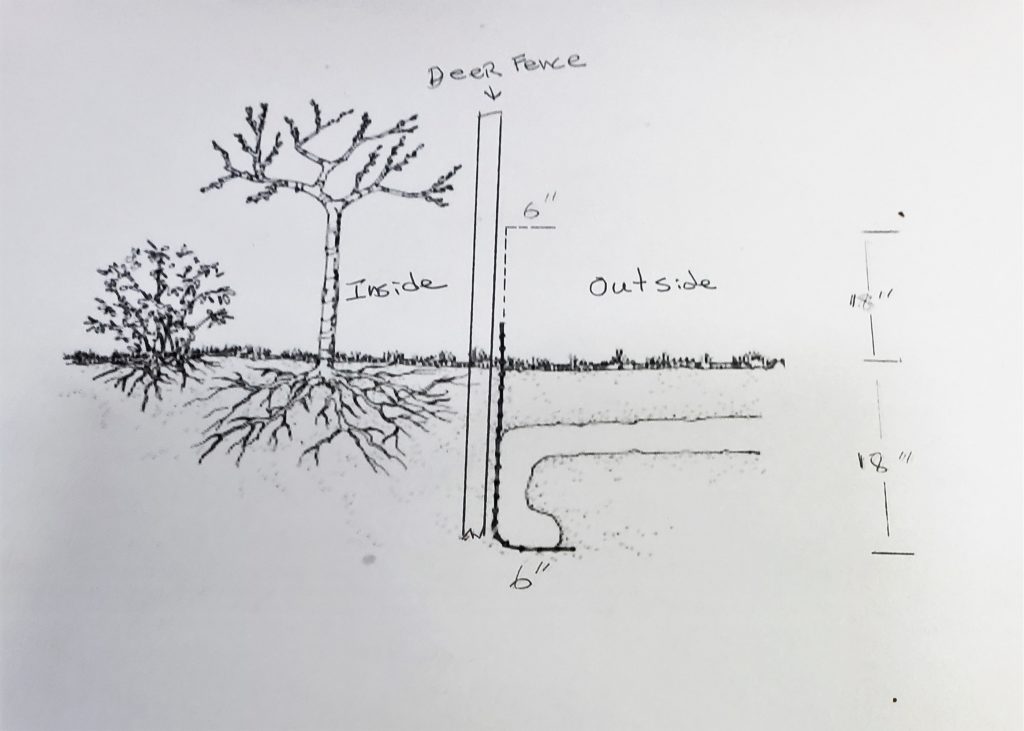
Understanding invasive animal biology is the key to making barriers that are effective, not unsightly and long lasting. Some animals, such as gophers and moles lack climbing skills so a barrier does not need to be very high but does need a horizontal ledge to provide additional security to the barrier. Also gophers and moles are not deep tunnel diggers with most runs less than one foot deep. Again an outward horizontal bend is needed in the advent of a deep tunnel reaching the bottom of the barrier. So our final design looks like this:
This design is usually added to an existing fence to provide support but can also just have it’s own support with posts 18” high and at 6-8 foot intervals. The wire roll width is 48” and preferably made of 304 grade stainless steel 3/4” square mesh. [button1 size=”small” color=”green_light” link=”https://gopherslimited.com/products/stainless-steel-wire-mesh-roll/”] Buy Gopher Wire [/button1] Most non-stainless wire mesh will degrade much faster and will need replacement.
Fence Dimensions to Fence Gophers Out
To be clear on the dimensions of the fence:
Dig a trench 6” wide and 18” deep
Use 48” wide x ¾” mesh gopher wire
Underground section 18” deep with 6” L bend to the outside
Above ground section 18” tall with 6” L bend to the outside
Trench digging can be done by hand with a trenching shovel or by using a motor powered trencher. If a fence already exists it will be impossible to trench close enough to attach the upper section. When planning a gopher fence and deer fence it is best to install the gopher fence first.
The Trickiness of Gates and Endpoints
Terminating and adding gates are the one place that is very vulnerable to penetration as most animals will simply follow along the fence until they find a way in. Often when terminating a fence that just separates a wild space from a garden, orchard, farm or vineyard the fence does not surround the growing area but just separates it from the wild area. Of course, this means that the ends of this separation fence are where animals following the fence line will normally enter. Again, considering the animal’s thought process, we now construct a turn around or a slight spiral to confuse the animal into turning completely around. At the other end we do the same. This seems to be very effective. We also recommend this technique at gates.
Securing the Gates is Essential
The hardest part of a secure enclosure is handling gates and driveways without allowing easy entry points for varmints. The gate with a gap under it definitely negates all the expense and work that has gone into a fence project. We have come up with some effective and interesting ideas.
The easiest way to secure the bottom of a gate if you have a paved walkway or driveway is to lower the gate so there is a gap on the bottom no more than a half inch, lower is even better. If the gate is on soil then add a 4 x 4 made of redwood or synthetic wood that will not rot and try to get an even small gap. Covering the wood with some fencing material and making a springy hump is best so that when the gate is closed there is no gap.
The sides of the gate also get a similar treatment. Again wrap the post of the fence with the wire leaving a springy hump toward the gate so when it is closed there is no gap. This technique is difficult at first as there are hinges on one side and other obstacles. Remember that at the gates you only need to add this protection as high as the existing gopher fence.
Feel free to contact us for more information and supplies.
[button1 size=”small” color=”green_dark” link=”https://gopherslimited.com/contact-us/”] Contact Us [/button1]
We are the manufacturer of the best gopher and varmint wire as well as the main consultant for these crop enclosures.
We have great ideas for your property to properly design and install a gopher-proof fence and how to solve many pest animal problems with our expert consulting services.
[button1 size=”small” color=”green_light” link=”https://gopherslimited.com/consulting-services/”] Read More [/button1]
Once you do start using products and techniques that do not harm the environment or predatory animals and pets you will find peace amongst the beauty of your gardens and farms and yards.
How to Protect Your “Victory” Garden from Hungry Animals
In this time of “Shelter In Place” gardening is a great way to feel productive and grow food that you know has only been touched by you. Gardening is very therapeutic as well and can ease isolation as you get to know and taste the difference in fresh fruits and vegetables.
This has been the perfect spring for starting a garden with the current weather system of occasional rain with periods of dry times. There will be some competition to the health of your garden, however, from wildlife that are becoming bolder due to the lack of human outdoor activity, less noise pollution.
This article is about how to protect your garden without the use of poisons.
A FENCE IS THE BEST DEFENCE
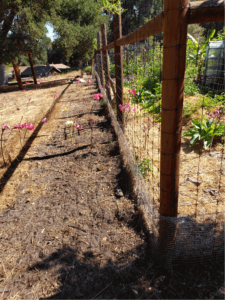
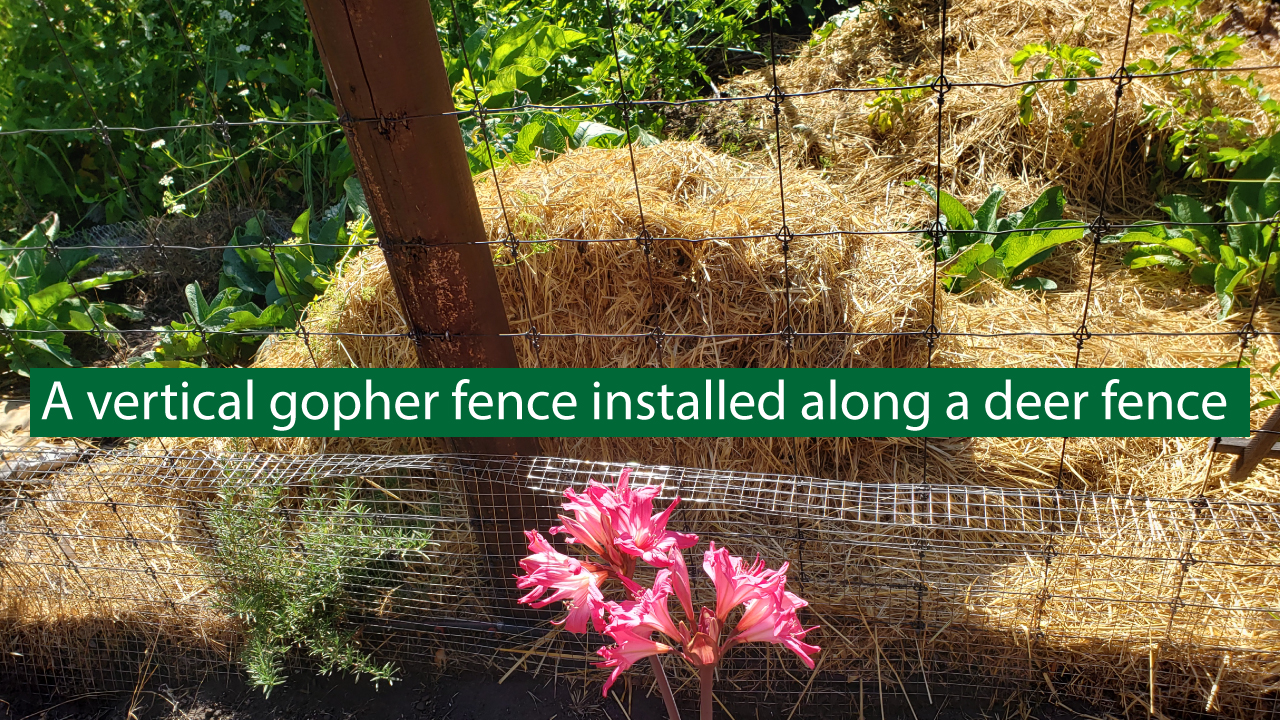
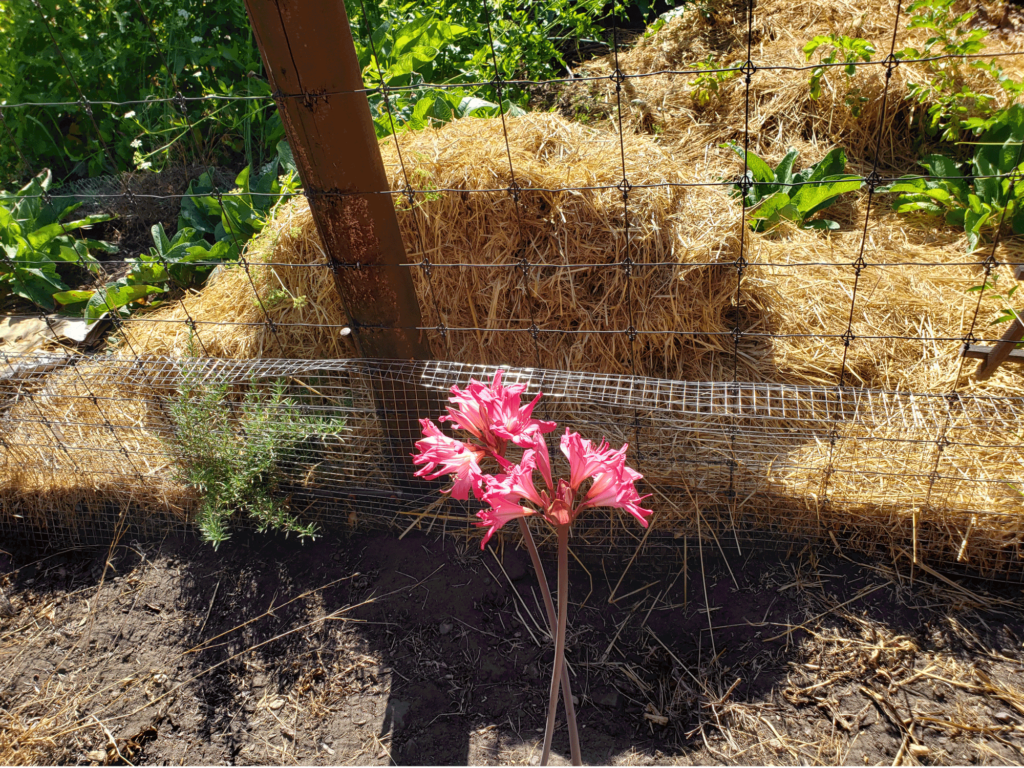
There are many ways to protect your crop. If you are in gopher country the very best way is to fence them out. You can circle your garden with a vertical fence: an underground and above ground barrier that will stop almost all burrowing and surface problems. If you are going to make, or already have a deer fence to attach to, this kind of barrier will stop almost anything.
The barrier itself starts with getting some ¾ inch gopher wire (stainless steel is best) that is 48” wide and as long as needed, often sold in 100’ rolls. Dig a trench along the outside perimeter of your deer fence. Around 16” deep and 6” wide as close to the fence as you can. A 6” trenching shovel is best in most cases or rent a power trencher.
Lay your wire out and bend a 6” “L” at the bottom and place it into the trench with the bottom of the “L” facing away from your deer fence and bury the wire. This will use half of the 48” width of the wire.
Attach the wire to your deer fence using wire ties or “hog rings” leaving 6 inches free at the top. Then bend the free wire to the outside and if you are using stiff wire just let it stay sticking out. This will stop most climbing animals since getting over it will require an upside-down climb.
At any gate openings you will need to make a wood or paver threshold and be sure your gate fits right on it to keep any critters from squeezing underneath.
Alternately, I often will make a “U” turn shape with the wire right at the gate or any termination of the fence so the animal will get turned around and head back along the fence to the other “U” turn and so on.
PROTECT YOUR RAISED BED GARDEN
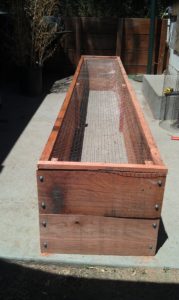
A very common way to protect your crop is to make raised garden beds using redwood or another wood resistant to rotting.
I recommend making the bed sides at least 12” high and installing a 2” x 6” seat around the top. This seat will not only make it easier to garden but also will prevent rodents from climbing over.
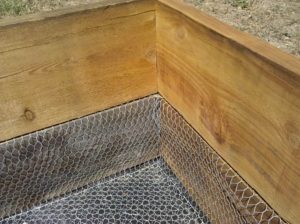
The bottom of the bed then needs protection from burrowing rodents like gophers, moles and rats. Again, I recommend using ¾” stainless gopher wire as it will outlast all other wires ensuring you will not have to remove all the soil and reline the bottom.
Attaching the wire is the most critical step. I have seen many failures due to inadequate fasteners, especially staples or U nails.
The wire must be sealed by sandwiching it between the side of the bed and another board or stiff item like steel or even PVC pipe drilled and screwed onto the bed.
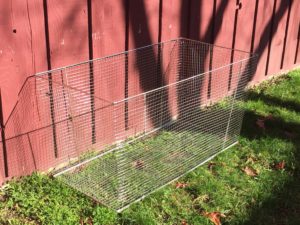
Another alternative is a premade garden bed constructed again of stainless steel mesh measuring 2” x 4” and 18-24” high.
These premade units should be buried about a foot or so deep, leaving enough sticking out to become a barrier to animals traveling on the surface (gophers often invade this way).
These garden bed gopher baskets can also be used in sets of two. You can connect them so that one sits upside down on top of the other and can easily be hinged on 1 side for opening and closing. This will stop virtually all invading animals including birds and deer. As well, this setup can be a temporary greenhouse just by adding some plastic sheeting.
GOPHER BASKETS
Let’s also remember of course that protecting individual plants with “gopher baskets” is a very easy way to protect large and small plants. This is a must for large valuable fruit trees and perennials as well as large garden vegetables like tomatoes, melons and squash.
Baskets come in sizes that are like the black pots that are used for pre-grown plants in nurseries. Most often found in 1 gallon, 5 gallon and 15 gallon sizes.
1 gallon size is usually used for bulbs and small root systems
5 gallon size for mid sized plants like tomatoes
15 gallon size for trees and some large medicinal plants.
There are some other sizes available for extra-large plants and trees that are 34” in diameter and 18” deep and like I mentioned above, garden beds that are 2’ x 4’ and 18” deep.
I highly recommend finding stainless steel baskets made with heavy wire (18 Gauge with ¾“ mesh openings) as opposed to the finer stainless threads or galvanized baskets. The heavy stainless baskets will outlast other products by a huge amount.
The barriers described above are the best way I know of solving the frustrating problem of fighting pest animals already eating your crops. This will help you avoid the trauma of not only seeing your plant destroyed, but also the task of trapping.
Next Posts:
THE ART OF THE TRAP
DETERRENTS THAT CAN MOVE ANIMALS OUT OF YOUR GARDEN
How to Get Rid Gophers: New Gopher Basket Perfect for Marijuana and Trees
Gophers Limited the only manufacturer of heavy gauge, preformed stainless steel gopher baskets has the solution to protecting trees and large plants such as marijuana and other large shrubs from gopher root damage. Dimensions of these baskets measure 34 inches across and 18 inches deep. Designed to perfectly drop into a 36 inch hole dug by an earth auger or by hand.
These baskets come in three easy to assemble pieces of sturdy reinforced 304 grade stainless steel and will last for decades without any degradation from soil acids. This is the main reason for the rotting of galvanized baskets. A great way to solve the question of how to get rid of gophers that damage plant roots. The 3/4 inch welded mesh is a perfect size to allow lateral roots to spread out out once planted. This is also the largest gopher basket you will find for sale anywhere.
[button1 size=”medium” color=”green_light” link=”https://gopherslimited.com/products/stainless-steel-extra-large-gopher-basket/”] Order [/button1]



 Terminating and adding gates are the one place that is very vulnerable to penetration as most animals will simply follow along the fence until they find a way in. Often when terminating a fence that just separates a wild space from a garden, orchard, farm or vineyard the fence does not surround the growing area but just separates it from the wild area. Of course, this means that the ends of this separation fence are where animals following the fence line will normally enter. Again, considering the animal’s thought process, we now construct a turn around or a slight spiral to confuse the animal into turning completely around. At the other end we do the same. This seems to be very effective. We also recommend this technique at gates.
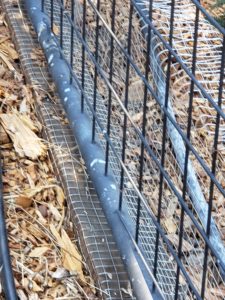 The easiest way to secure the bottom of a gate if you have a paved walkway or driveway is to lower the gate so there is a gap on the bottom no more than a half inch, lower is even better. If the gate is on soil then add a 4 x 4 made of redwood or synthetic wood that will not rot and try to get an even small gap. Covering the wood with some fencing material and making a springy hump is best so that when the gate is closed there is no gap.
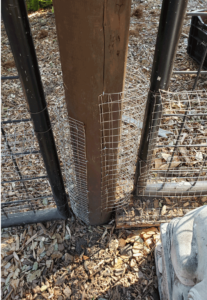 is no gap. This technique is difficult at first as there are hinges on one side and other obstacles. Remember that at the gates you only need to add this protection as high as the existing gopher fence.